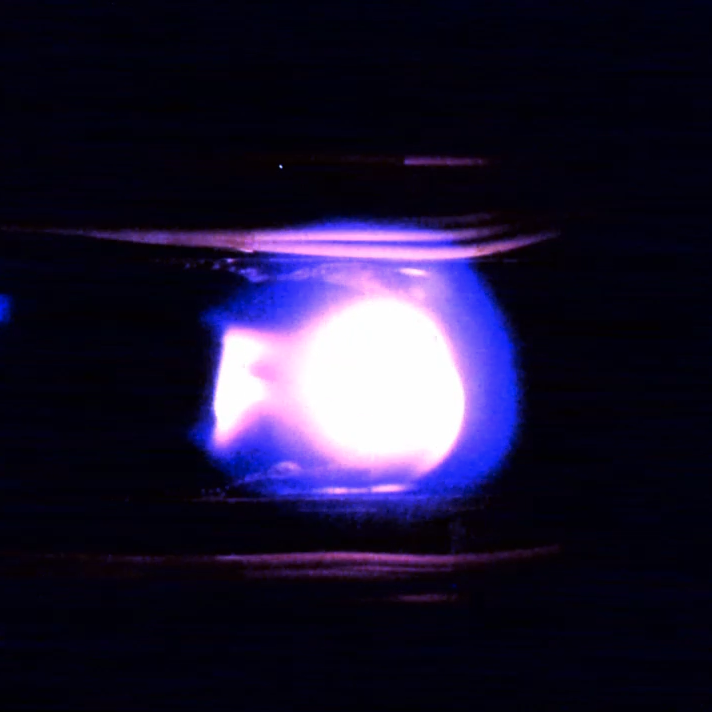
Residence Time Driven Flame Spread (RTDFS) (collaboration with Prof. Bhattacharjee)
The RTDFS experiments were conducted on the International Space Station between Oct. 2024 and Feb. 2025. Flames over thin acrylic samples spread in a microgravity environment without any external flow (quiescent). Theoretical modeling predicts that steady flame spread over solid fuels cannot be sustained, even in a high oxygen environment if the fuel exceeds a critical thickness. These experiments provide an opportunity to verify the theoretical models.
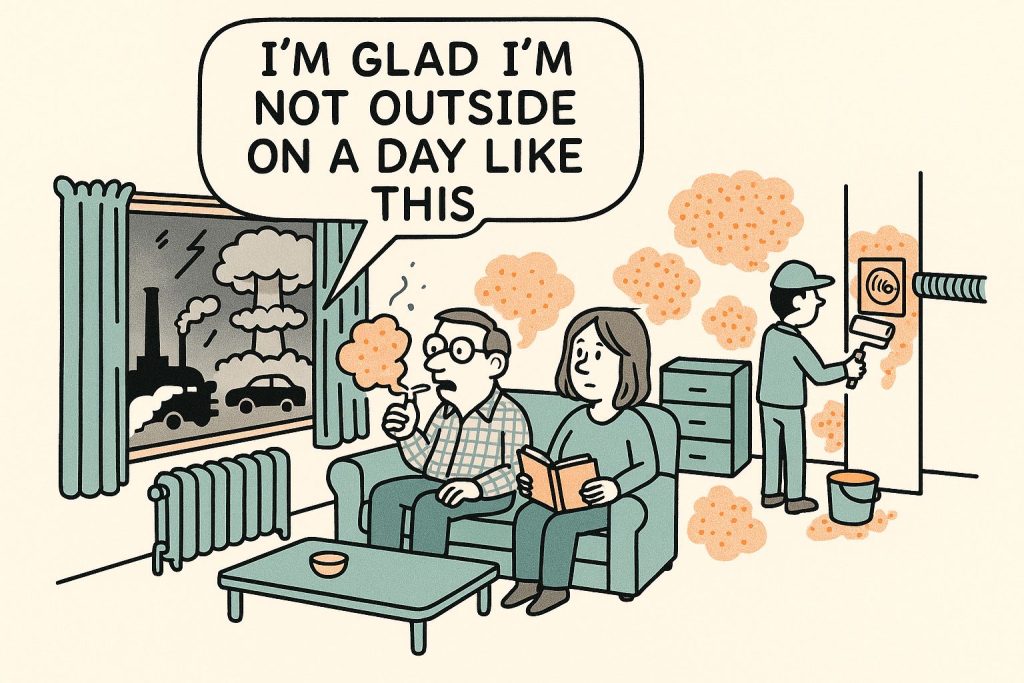
After the Flames in Post-Fire WUI Homes: Characterization of Toxic Emissions, Environmental Concentrations, and Exposures (NSF)
An increasing umber of wildfires that approach has made the Wildland-Urban Interface (WUI) one of the most dangerous regions in the United States. When WUI fires burn through communities, the destruction extends far beyond structural losses. Unlike wildland fires that mostly burn trees and grass, WUI fires ignite plastics, electronics, and household furnishings, releasing a complex mix of harmful air pollutants. This project will identify the pollutants that are released and quantify the amount produced when materials typically present in WUI environments burn. Controlled burns will be conducted in the laboratory to understand how these pollutants move through homes, settle on surfaces, and become airborne again, potentially exposing returning residents and workers. Air samples from homes affected by the 2025 Los Angeles fires will also be collected. Results of the project will improve our understanding of indoor air quality after a fire and help guide safer clean-up and reoccupation strategies. Funding Agency: NSF; Principal investigator: Prof. Hanyang Li (SDSU), Co-Investigators: Prof. Luca Carmignani (SDSU), Prof. Neil Klepeis (SDSU)

California Fire Science Consortium (JFSP)
The California Fire Science Consortium is a network of scientists and managers that strives to accelerate the awareness, understanding, and adoption of wildland fire science information by federal, tribal, state, local, and private stakeholders within ecologically similar regions. Our mission is to be a neutral, customer-driven collaborative group that facilitates the flow of fire science information and dialogue. Prof. Carmignani is the Principal Investigator for the Central and Southern California sub-region. Funding agency: Joint Fire Science Program.
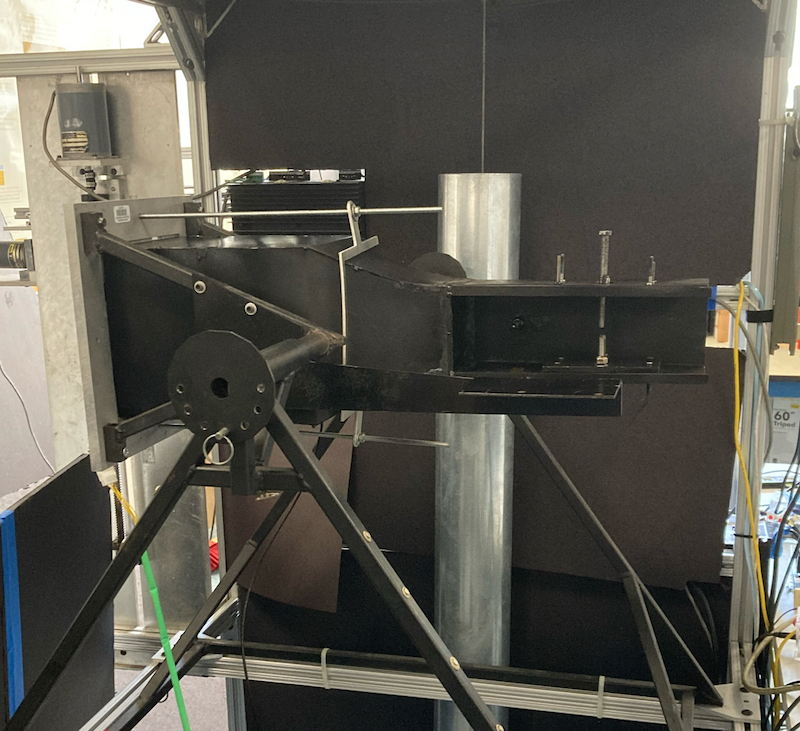
Ember Ignition of Coast Live Oak Leaves (SDSU)
This project is funded through the 2025 SDSU Seed Grant Program. Coast Live Oak tree leaves are tested in a wind tunnel to determine their ignition conditions. Results from this study will help understand the role of vegetation in the spread of wildfires in the Wildland-Urban Interface.
Senior design projects
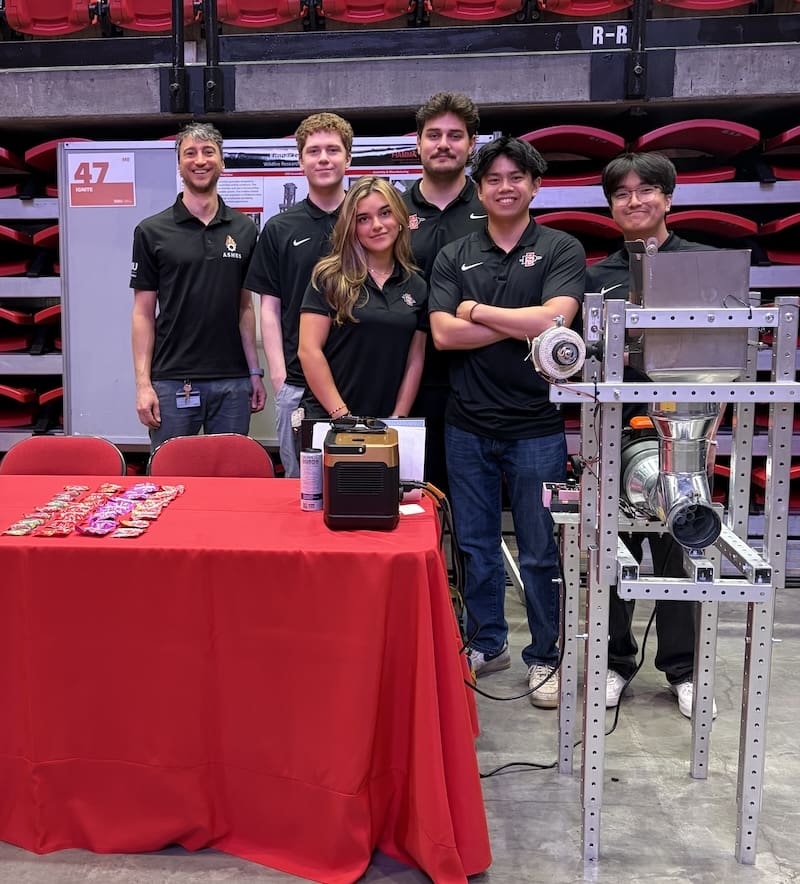
Ember generator 2.0 (Ignite), Fall 2025 – Spring 2026
Team (from right to left): Mike Khuu, Ronin Toy, Tyson Chavez, Krystal Morera, David Gray, Prof. Carmignani (sponsor)
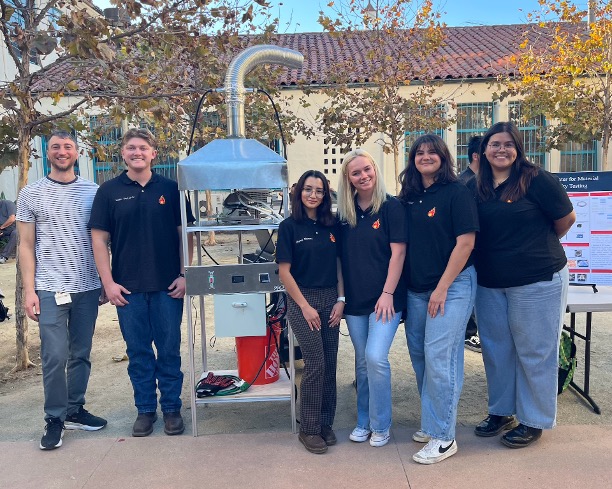
Cone Calorimeter (PyroManiaX), Spring – Fall 2025
Team (from left to right): Prof. Carmignani (sponsor), Liam McCarty, Diana Chavez, Olivia Towers, Emily Halsey, Yani Rincon Ochoa
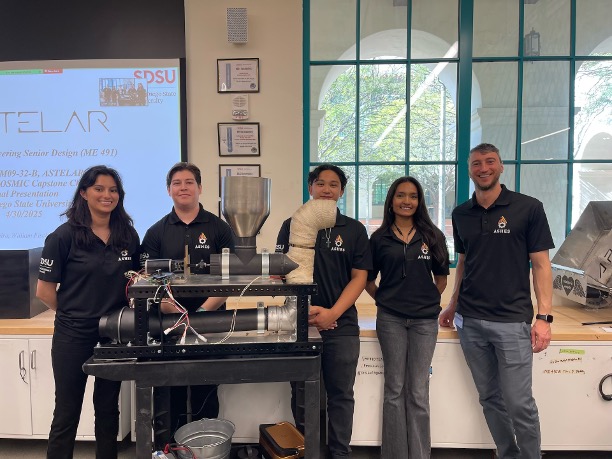
Ember generator (ASHES), Fall 2024 – Spring 2025
Team (from left to right): Galia Melgoza Cruz, Jeremy Parks, Emmanuel Flores, Riya Shah, Prof. Carmignani (sponsor)
Conference presentations
- Carmignani L., Kaplan S., Bhattacharjee S., Ferkul P.V., Olson S.L., Flame Spread and Extinction over Acrylic Sheets in Microgravity at Increased Oxygen Concentration, 41st Annual Meeting of the American Society for Gravitational and Space Research, Phoenix (AZ), Dec. 3-6, 2025
- F. Faßbender, L. Carmignani, Effect of Moisture Content on the Ignition of Eucalyptus Leaves, 14th US Nat. Meet. Combust. Inst., Boston (MA), March 16-19, 2025
Recent publications
- Carmignani L., Kaplan S., Bhattacharjee S., Ferkul P.V., Olson S.L., Quiescent flame spread and extinction over acrylic sheets in microgravity at increased oxygen concentration, Proc. Combust. Inst., 2026